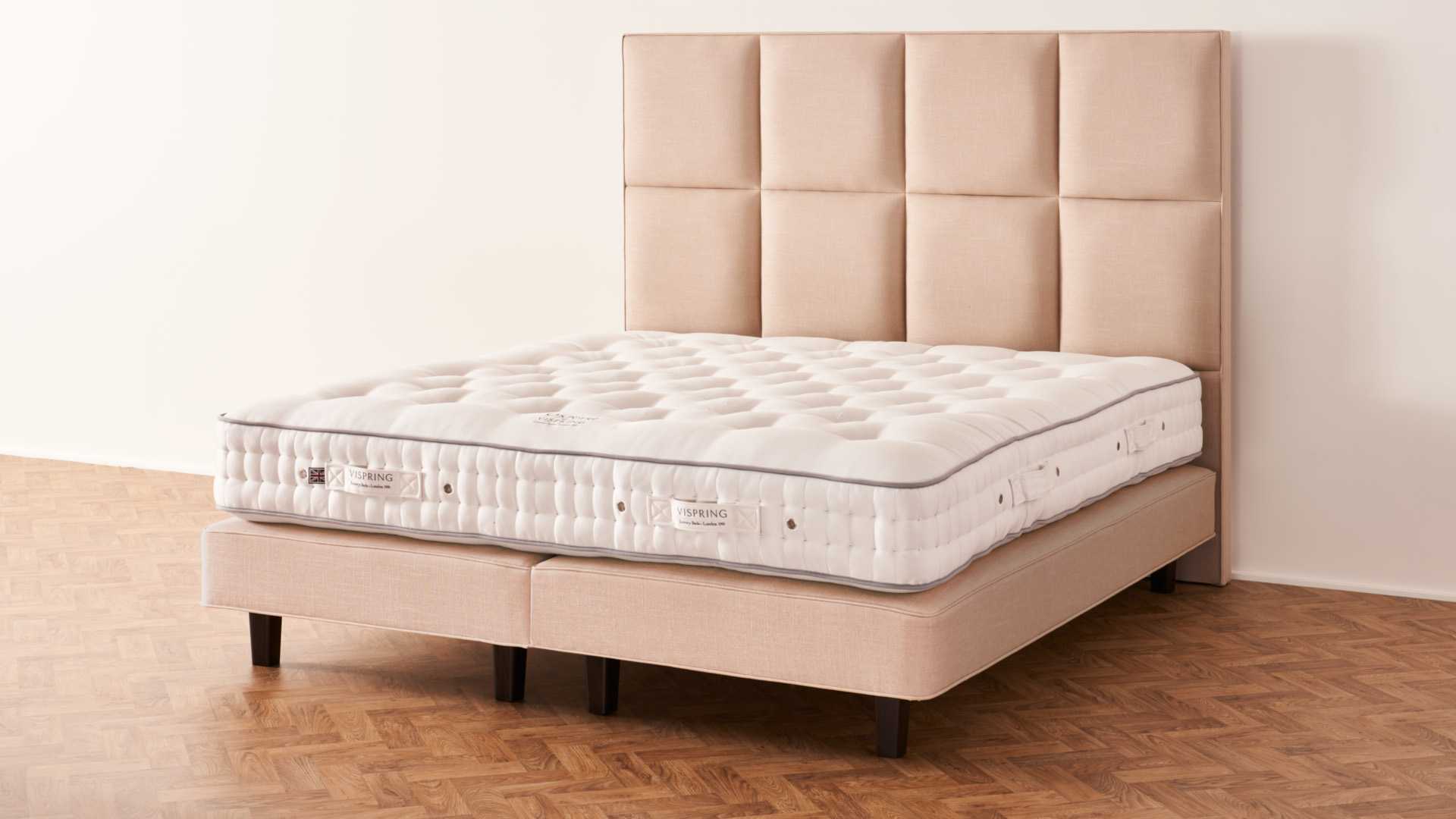
Mattress materials · Construction guide
What to Examine in a Natural Latex Organic Mattress Core
The word “latex” can suggest a simple, singular material. Inside a mattress, however, it may describe a core with its own method of manufacture, firmness, thickness, and place in a layered construction. Looking closely at those details makes it easier to compare beds by what they are built to do, rather than by the confidence of the label on the outside.
A mattress is a quietly complicated object. It takes the shape of a room, then disappears from attention; night after night, it receives the ordinary weight and movement of a body. Its core is where much of that conversation between sleeper and bed takes place. The core determines how the mattress responds when pressure is applied, how readily it returns to shape, and how the support beneath the surface is distributed.
That is why, when comparing natural latex organic mattresses, the core is a useful place to start. It is not the only part that matters. The cover, any comfort layers above the core, the foundation below it, and the sleeper’s own preferences all contribute to the experience. Still, a clear account of the core can reveal whether a mattress is a solid slab, a carefully layered construction, or something whose materials are less straightforward than its name implies.
Specifications are not bedtime reading, exactly. They can nevertheless be more revealing than a series of adjectives—“cloud-like,” “supportive,” “luxurious”—that make a mattress sound both irresistible and difficult to distinguish from its competitors. A useful comparison begins with concrete questions: What is the core made of? How is it constructed? What firmness choices exist? Which certifications apply, and to which components?
First, identify what “core” means
In mattress descriptions, the word core generally refers to the principal supportive section of the mattress. In a latex mattress, this may be one thick latex layer or several layers arranged in a stack. Above it might sit thinner comfort layers; around it, a fabric cover. The exact arrangement differs between models, so a statement such as “natural latex construction” does not, by itself, tell you how much latex is present or where it sits.
Ask for a layer-by-layer description. A useful specification names the material, thickness, and function of each layer, beginning at the sleep surface and moving down. It should make clear whether the latex forms the entire support core, is one part of a hybrid construction, or appears only in a thinner comfort layer over another material. Those distinctions affect both feel and the way the mattress may respond to pressure.
Thickness deserves particular attention. A mattress may contain multiple latex layers with different firmnesses, or a single core with a separate comfort layer on top. The total mattress height does not reveal the thickness of the latex itself: covers, quilting, and other materials contribute to the finished measurement. If the product information does not specify layer thickness, ask the manufacturer or retailer rather than trying to infer it from the mattress profile.
It can help to make a simple construction note for each mattress under consideration: surface materials; comfort layers; core material and thickness; cover; and stated foundation requirements. A little orderly writing can prevent a familiar shopping oddity: discovering, after comparing two beds for an hour, that the available descriptions were talking about entirely different parts of them.
Natural, organic, and the language between them
“Natural latex” and “organic latex” are not interchangeable claims. Natural latex is made from the milky sap of rubber trees, processed into a resilient foam. But a claim about natural origin does not establish that the material is certified organic. Organic status depends on documented standards and a certification process, and the scope of that certification matters.
Look for the name of the certifying organization and the specific product or component covered. A certification applying to a latex ingredient is not automatically a certification of the entire finished mattress. Nor does a natural-material claim necessarily cover the cover fabric, thread, fire barrier, adhesives, or other components. If whole-product certification is important to you, verify that the documentation applies to the mattress as a finished product, not merely to one material in it.
Some certification programs assess the content or processing of materials; others address chemical emissions, manufacturing practices, or environmental criteria. These are distinct questions. A label can be useful evidence, but it is not a universal guarantee about every attribute a shopper might care about. The most informative product information identifies the standard, names the certifying body, and explains what was assessed.
It is reasonable to ask for current documentation, especially when a product page relies on broad phrases such as “eco-friendly,” “clean,” or “non-toxic.” Such language may communicate a manufacturer’s intention, but it is not as specific as a standard that can be checked. A careful buyer need not become a certification auditor; the aim is simply to understand what a claim does—and does not—cover.
How the latex is made
Two manufacturing methods commonly discussed in latex bedding are Dunlop and Talalay. Both begin with latex, but their processing differs, and the resulting materials are often described as having different characteristics. Those descriptions can be useful orientation, not a substitute for trying a mattress. The names alone do not determine whether a particular bed will feel right to a particular sleeper.
Dunlop latex is poured into a mold and vulcanized. Talalay production includes additional steps involving expansion and freezing before vulcanization. Retail descriptions often characterize Dunlop as denser or more grounded and Talalay as lighter or more buoyant. These are broad impressions, not guarantees: firmness, formulation, layer thickness, and the surrounding construction all affect the final feel.
Ask whether the core is Dunlop, Talalay, or a combination, and whether the description applies to every latex layer. Some mattresses use one method throughout; others combine materials in different positions. If the product specification identifies only “latex foam,” it may be worth asking for more detail. This is not a test of a salesperson’s memory. It is a way of finding out whether the construction is described with enough precision to compare.
Origin and manufacturing method should also be kept distinct. A product can use latex from a particular region or supplier without that fact, on its own, establishing organic certification or a particular performance. Likewise, a method name does not tell you how firm the mattress is. Each detail answers a different question, and the useful picture emerges when they are considered together.
Firmness is a description, not a measurement of you
Firmness is among the most prominent numbers—or words—on a mattress page, and among the least universal. “Medium” is a category, not a promise that every medium mattress will feel alike. A person’s perception is influenced by body shape, weight distribution, sleeping position, the thickness of comfort layers, and the foundation beneath the mattress. Even the same mattress can feel different to two people sharing it.
When comparing firmness options, find out whether the rating refers to the latex core, the complete mattress, or a manufacturer’s own scale. Ask whether the core is available in more than one firmness and whether a mattress with several layers can be rearranged. If layers are interchangeable, learn whether the manufacturer permits changing their order and whether doing so affects a warranty.
Firmness and support are related but not identical ideas. Firmness describes the initial impression of resistance at the surface; support concerns how the mattress holds the body in a given position. A mattress can feel gently yielding while still offering substantial resistance deeper down, particularly when its comfort layer and core are designed to work together. Conversely, a very firm surface is not automatically the best-supported surface for every sleeper.
The most useful approach is comparative rather than absolute. If you can try mattresses, spend enough time in your usual sleeping positions to notice pressure, ease of movement, and whether the surface feels comfortable without forcing you into a new posture. If you cannot try a model in person, review the trial and return terms before buying. A clear return policy is practical information, not an admission that the product is uncertain.
Density, resilience, and the question of durability
Density, firmness, and durability are sometimes treated as if they were synonyms. They are not. Density describes how much material is present in a given volume; firmness describes resistance to compression. A denser latex layer is not necessarily firmer than every less-dense layer, and a firmness label alone does not establish how a mattress will age.
Latex is often valued for resilience: after pressure is removed, the material tends to return toward its original shape. But the lifespan of a mattress cannot be read from a single property. It also depends on formulation, construction, use, care, and the conditions under which the mattress is supported. Seek specific warranty terms and read what they cover, including exclusions and requirements for the foundation.
Ask whether the manufacturer provides density figures or other technical information for the core. If it does, treat the figures as comparison points, not as a shortcut to certainty. A specification is most meaningful when the maker explains what it applies to and how it relates to the mattress as a whole. Claims that a bed will last a particular number of years should likewise be distinguished from a warranty period: a warranty defines coverage under stated conditions; it does not guarantee a particular sleeping experience or lifespan.
Construction details can also indicate how well the mattress is likely to suit routine use. A stable core, a well-described layer stack, and clear care instructions are more informative than an unexplained promise of exceptional durability. There is no need to regard technical language with suspicion. It becomes useful when it is specific, consistent, and connected to the actual product.
Zones, layers, and what “ergonomic” cannot settle
Some latex cores are zoned, meaning different areas are intended to respond differently across the mattress. Zones may be created through changes in firmness, perforation, or another construction feature. Their purpose is to vary resistance beneath different parts of the body, but the word “zoned” by itself leaves plenty unanswered.
Ask how many zones the core contains, where they are positioned, and whether the design can be rotated without changing their alignment. A fixed arrangement may be designed around a particular orientation; rotating it could place its zones differently beneath the sleeper. If the mattress is available in different sizes, ask whether the zone layout changes with size and whether it is intended for a particular sleeping position. The answer should describe the construction, rather than promise that zones will solve a medical or postural problem.
Layering can be equally consequential. A soft upper layer over a firmer core will not necessarily feel like a single core of the same stated firmness. Each layer compresses and influences the layer beneath it. The order, thickness, and firmness of the components are therefore worth understanding as a system. A headline about “five zones” is less helpful than a clear diagram or written specification explaining what those zones are and how they are arranged.
Be cautious with sweeping claims about alignment, pain relief, or health. Comfort is personal, and a mattress description is not a substitute for clinical advice. For ordinary comparison, concentrate on observable features: what the mattress is made of, how it feels in the positions you use, and what options exist if the fit is not right.
The base is part of the construction conversation
A latex core does not perform in isolation. The bed base provides the surface beneath it, and the mattress maker may set requirements for the kind of support used. Slats, platform bases, and adjustable bases can differ in spacing, flexibility, and compatibility. Before purchase, check the manufacturer’s instructions for the precise support needed, including any maximum spacing between slats or requirements for a solid surface.
This matters for two reasons. First, a base that does not adequately support the mattress may affect its feel. Second, using an unapproved foundation can complicate warranty coverage. Confirm that the proposed base is compatible with the mattress, especially if it is adjustable. Latex’s ability to flex does not mean every latex construction is suitable for every adjustable frame.
Room measurements belong in the same practical conversation. Check mattress dimensions, overall bed height, doorway and stair access, and the weight of the mattress if you expect to move it. A dense latex core can make a mattress substantial. These details are less romantic than a discussion of materials, but the practical life of a mattress begins when it arrives at the house.
A short checklist for comparing cores
When the product pages begin to blur, return to a concise list. For each mattress, record the answers to the following questions. If information is missing, mark it as unknown rather than filling the gap with an assumption.
- What is in the core? Confirm whether it is natural latex throughout, a latex layer within a hybrid, or another construction.
- How is it built? Note the number of layers, their thicknesses, and whether the latex is Dunlop, Talalay, or a combination.
- What firmness choices are available? Find out what the rating applies to and whether layers can be rearranged or replaced.
- What does “organic” mean here? Identify the certifier, the applicable standard, and the precise components or finished product covered.
- Is the core zoned? If so, ask how the zones are arranged and whether mattress orientation matters.
- What base is required? Check support, slat spacing, adjustable-base compatibility, and warranty conditions.
- What happens if it is not comfortable? Read the trial, return, transport, and restocking terms before committing.
This list does not produce a universal winner. It does something more useful: it makes the comparison intelligible. One mattress may offer a simpler, single-layer core; another may have a more elaborate arrangement. One may disclose certification documents clearly, while another may emphasize broad environmental language. Which matters most will depend on the sleeper, the budget, and the priorities established before the search began.
A better way to read the label
The attraction of natural latex is easy to understand. It is a material with a distinct feel, a recognizable origin, and a place in a growing conversation about the materials used in sleep products. But a label is an opening, not a conclusion. “Natural latex organic mattress” does not tell you the number of layers, the firmness of the core, the scope of a certification, or whether the mattress will work with the base already in your room.
Look for a coherent account: materials named plainly; a core described by composition and thickness; firmness information that distinguishes the layer from the whole mattress; certification claims that can be verified; and compatibility instructions that are easy to find. When those facts are available, comparison becomes less a matter of interpreting mood and more a matter of understanding construction.
A mattress will, in the end, be judged in the private circumstances of use: how it feels after a long day, how it accommodates familiar habits, how it fits the room and its frame. Specifications cannot make that judgment on your behalf. They can, however, help you arrive at it with fewer mysteries—and with a clearer sense of what, exactly, is beneath the cover.